


Top 5 Engineering Technology News Articles for the Week

Happy Friday, folks! This week’s most interesting engineering technology news articles looks at the first test drive of a self-driving car, how a computer was taught to predict human’s emotions with over 80% accuracy and how a high-tech shack is raising the standard of living in one African village.

Enjoy!

IEEE Spectrum
Teaching Computers to Hear Emotions

This is a podcast that looks at recent research that taught a computer to detect six different emotional states with 81% accuracy - anger, sadness, disgust, a neutral state, happiness, and fear. Announced at IEEE’s Workshop on Spoken Language Technology in December, the research was conducted by two engineers – one electrical and one computer engineer to be exact.

Interestingly, this research was originally established to help psychologists do a better job  of determining the emotional content in interactions between a husband and a wife, or between parents and a child.

Technically speaking, the researchers started by taking a chunk of recorded speech, chopping it up into 60 milliseconds bits and listened for 2 variables — loudness and pitch. Then, as most researchers do, they measured the loudness and pitch in many different ways.

This led to them being able to essentially “teach” the computer to recognize different variables in a piece of speech and identify the emotion. How cool is that?

CNN Tech
High-tech shack brings solar power to slums

In remote locations of Africa, there are large areas of homes with little or no electricity. However, situated in the middle of “the sprawling cluster of makeshift wooden structures and rusty corrugated iron dwellings” is the iShack, a new dwelling developed by researchers at the University of Stellenbosch. The iShack was designed to raise the living standards of its inhabitants by offering electricity and protection from extreme temperatures in an environmentally friendly way.

Researchers simulated the iShack to determine the ideal building materials and the design of the shack, including the optimization of the placement of windows and the sloped roof to collect rainwater. The house will produce enough electricity to power three lights, a mobile phone charger and an outdoor motion detector spotlight. Hopefully, others will see the benefits of the iShack and use the resources available to them to improve the living conditions in the area.

CNN Money
Toyota Reveals Self-Driving Car

Most of us probably remember getting behind the wheel for the first time – backing into another vehicle, running a stop sign, or getting pulled over – but what a rush! However, will young up and coming drivers get the same chance to experience driving for the first time?

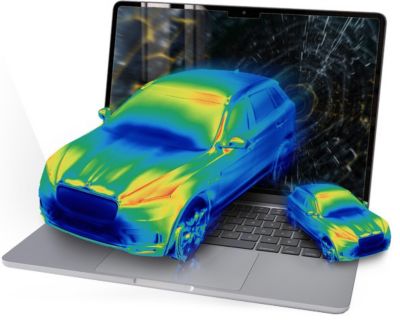
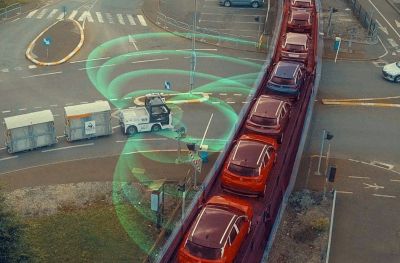
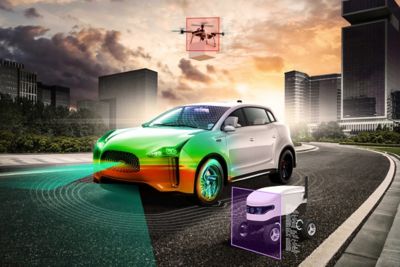
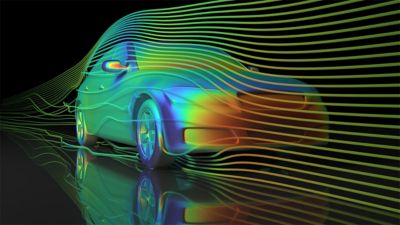
Google test drove a self-driving car in Washington, D.C. traffic. At this point, the technology is designed to help drivers avoid crashes and overall, help create safer drivers – but that doesn’t mean the technology could fully take over the act of piloting the car in the future. Toyota has researched and simulated vehicle-to-vehicle and vehicle-to-infrastructure communication, allowing cars to communicate with other cars and items such as traffic lights, bad weather conditions and pedestrians.

In a recent Desktop Engineering article, the ANSYS manager of global automotive strategy, Sandeep Sovani, said that driverless vehicles are possible, but need to have an advanced understanding of the positions of objects nearby, which is still a good ten years away. Henry Ford created the car, but probably never envisioned a driverless car. With many companies working on what seem to be significant parts of driverless vehicles, only one question remains: “Will the driverless vehicles be available in colors other than black?”

Design News
Military Robots Extend Humans’ Reach

The use of unmanned aerial vehicles (UAV) are on the rise in the military. Design News highlights several military robots that are helping us humans extend our reach and get information about places and spaces that might not be safe for us to go.

Image of Nighthawk MAV

A robotic system making strides in the military
Photo courtesy Design News

One of the cooler looking models they highlight is a mini  UAV called the Nighthawk Micro Air Vehicle (MAV) made of carbon fiber composite. It takes advantage of GPS technology to conduct intelligence, surveillance and reconnaissance (ISR)  missions. Had enough of the abbreviations yet?

It has over a 6-mile radius and weighs just 1.6 lbs and can cruise at a speed of 20-35 plus mph. The system can be operated in semi-manual and manual flight modes and is pretty cool.

ANSYS’ A&D expert, Rob Harwood, says in a recent article that appeared in Defense Tech Briefs that simulation harnesses the power of computers with software that solves the fundamental equations of physics that allows designers and analysts to create virtual representations of complete UASs and their payloads for design space analysis and optimization prior to physical testing. While a mouthful, it certainly rings true. The role of simulation in the development of UAVs is growing and isn’t showing signs of slowing down.

R&D Magazine
Smarter Infrastructure

Undetected structural problems in old infrastructures like tunnels or bridges can be disastrous. You might recall the recent incident in the Sasago tunnel just outside of Tokyo. Nine people were killed when huge chunks of concrete began to fall from the roof of the tunnel, starting a fire and trapping people in their vehicles.

Preventing incidents like this (although rare) comes down to the ability to be able to tell when structural problems may become a threat to public safety and is now a major priority to government. How do you do that? Well, you monitor them more closely, of course.

The Centre for Smart Infrastructure and Construction (CSIC) recently designed a new device that could convert the vibration experienced by structures into electricity which could power small monitoring devices to keep an eye on the infrastructure in places that aren’t easily accessible by humans (like under a bridge or in a tunnel).

Batteries become a main pain point when developing devices like this, but since this device is self-powered, there’s no need to have anyone change the batteries which saves the industry money while increasing visibility.

In addition to the construction industry, the device also has potential use for powering wearable medical devices or extending the life of batteries in mobile phones.

This is just another way that engineering technology is making our lives more safe.

Have a great weekend!